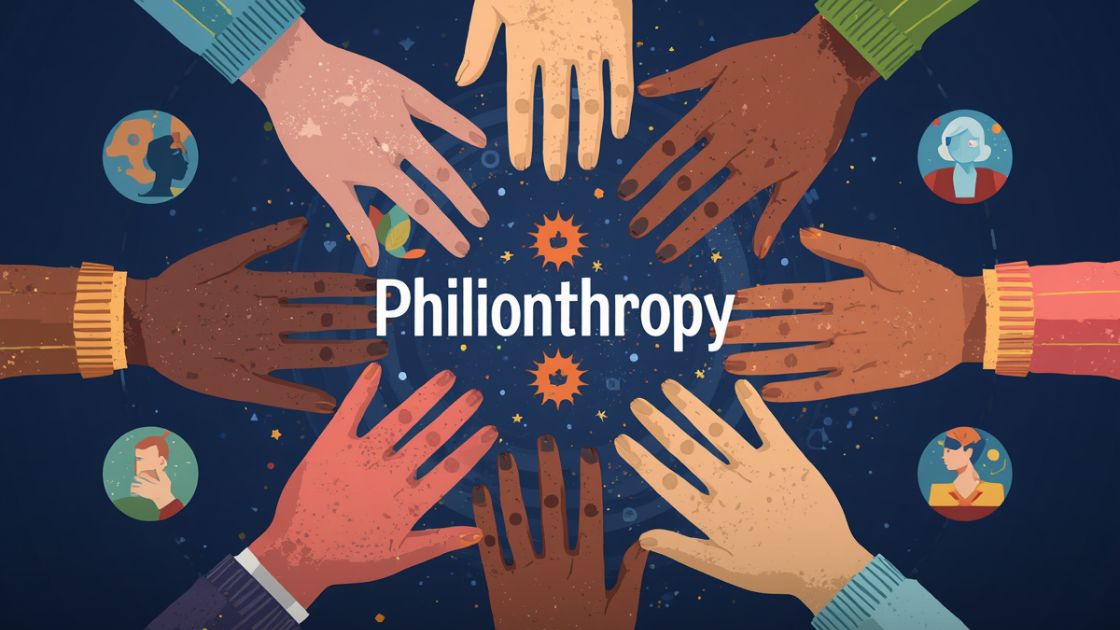
Karina and Zeeshan Hayat on the Role of Philanthropists in Solving Global Challenges


The world faces a wide range of complex challenges, from poverty and climate change to healthcare disparities, educational inequality, and humanitarian crises. Governments, international organizations, and businesses all play important roles in addressing these issues, but another group has become increasingly influential in driving meaningful change: philanthropists.
Modern philanthropists contribute far more than financial resources. They bring vision, innovation, leadership, and the ability to mobilize people and institutions around shared goals. By supporting transformative initiatives and investing in long-term solutions, philanthropists have become powerful agents of social progress.
As global challenges grow in scale and complexity, the role of philanthropy continues to evolve, offering unique opportunities to create lasting impact across communities and nations.
Addressing Gaps Where Resources Are Limited
Many global challenges require significant investment and long-term commitment. In some cases, governments and public institutions may face budget limitations, competing priorities, or bureaucratic constraints that make it difficult to respond quickly and effectively.
Philanthropists can help bridge these gaps by directing resources toward underserved communities, emerging issues, and innovative solutions. Their flexibility allows them to support initiatives that may not yet qualify for public funding but have strong potential for impact.
By filling critical resource gaps, philanthropists help ensure that important causes receive the attention and support they need.
Driving Innovation and Experimentation
One of the greatest strengths of philanthropy is the ability to take calculated risks.
Governments and large institutions often operate within strict frameworks that limit experimentation. Philanthropists, however, can support bold ideas, pilot programs, and innovative approaches to solving social problems.
Many breakthrough solutions in education, healthcare, technology, and environmental sustainability began as experimental projects funded by philanthropic organizations. By investing in innovation, philanthropists help identify new strategies that can later be expanded and adopted on a larger scale.
Innovation is often essential when addressing challenges that traditional methods have struggled to solve.
Supporting Education and Knowledge Development
Education remains one of the most powerful tools for addressing global challenges. It creates opportunities, reduces inequality, and empowers individuals to contribute positively to society.
Philanthropists play a significant role in supporting educational initiatives through scholarships, school development programs, research funding, and access to learning resources.
Beyond formal education, many philanthropic efforts focus on leadership development, vocational training, and lifelong learning opportunities. These investments help individuals acquire the skills needed to improve their lives and contribute to economic and social progress.
By supporting education, philanthropists help build stronger communities and future generations of problem-solvers.
Strengthening Healthcare Systems
Healthcare remains a critical challenge in many parts of the world. Limited access to medical services, disease outbreaks, and healthcare inequalities continue to affect millions of people.
Philanthropists contribute by funding medical research, supporting healthcare infrastructure, expanding access to treatment, and promoting public health initiatives. Their investments often accelerate scientific discoveries and improve healthcare delivery in underserved regions.
In addition to addressing immediate health concerns, philanthropy can strengthen healthcare systems and improve long-term outcomes for entire populations.
Healthier communities are better equipped to pursue economic growth, educational achievement, and social stability.
Advancing Environmental Sustainability
Climate change and environmental degradation are among the most pressing global challenges of our time.
Philanthropists are increasingly supporting initiatives focused on renewable energy, conservation, sustainable agriculture, climate research, and environmental education. These efforts help address both the causes and consequences of environmental challenges.
Philanthropic funding often supports innovative environmental projects that may take years to produce measurable results but have the potential to create lasting positive change.
Protecting the environment requires long-term commitment, and philanthropy can play a crucial role in supporting sustainable solutions.
Promoting Social Equity and Inclusion
Inequality remains a significant barrier to global progress. Millions of people continue to face obstacles related to income, education, healthcare, gender, disability, and access to opportunity.
Philanthropists can help address these disparities by supporting programs that promote inclusion, economic mobility, and equal access to essential services.
Investments in social equity create opportunities for marginalized communities and contribute to more stable and prosperous societies.
When individuals have access to the resources and opportunities they need to succeed, entire communities benefit.
Building Cross-Sector Partnerships
Global challenges are often too complex for any single organization to solve alone.
Effective philanthropists recognize the importance of collaboration and actively build partnerships among governments, nonprofit organizations, businesses, academic institutions, and community leaders.
These partnerships combine diverse expertise, resources, and perspectives to develop comprehensive solutions. By bringing stakeholders together, philanthropists help create coordinated efforts that maximize impact.
Collaboration increases efficiency and enables large-scale initiatives that would be difficult to achieve independently.
Empowering Local Communities
Lasting solutions often emerge from within communities themselves.
Modern philanthropy increasingly focuses on empowering local leaders and organizations rather than imposing solutions from the outside. Community members possess valuable knowledge about their own challenges, strengths, and priorities.
By supporting local initiatives, philanthropists help build capacity, strengthen institutions, and encourage sustainable development.
Empowerment creates ownership and ensures that solutions are tailored to local needs and circumstances.
Encouraging Accountability and Impact Measurement
As philanthropy evolves, there is growing emphasis on accountability and measurable outcomes.
Effective philanthropists seek to understand the real-world impact of their investments. They establish clear goals, evaluate progress, and adjust strategies when necessary.
Impact measurement helps ensure that resources are being used effectively and that initiatives are producing meaningful results.
This focus on accountability strengthens trust and increases the overall effectiveness of philanthropic efforts.
Inspiring Collective Action
Beyond financial contributions, philanthropists have the ability to inspire others to become involved in solving global challenges.
Their leadership can raise awareness, attract additional funding, encourage volunteerism, and mobilize communities around important causes. By using their influence responsibly, philanthropists can amplify the reach and impact of social initiatives.
Collective action often generates greater results than any single effort alone. When individuals, organizations, and communities work together, meaningful change becomes more achievable.
Conclusion
Philanthropists play a vital role in addressing some of the world’s most pressing challenges. Through strategic investments, innovation, education, healthcare support, environmental initiatives, and community empowerment, they help create solutions that extend far beyond traditional charitable giving.
Their ability to take risks, support long-term projects, and foster collaboration makes philanthropy a powerful force for positive change. However, the most effective philanthropists understand that solving global challenges requires more than generosity. It requires vision, leadership, accountability, and a commitment to sustainable impact.
As the world continues to face complex social, economic, and environmental issues, philanthropists will remain essential partners in building a more equitable, resilient, and prosperous future for all. Their contributions not only address immediate needs but also help create the foundations for lasting progress on a global scale.
About 100 Meals a Week